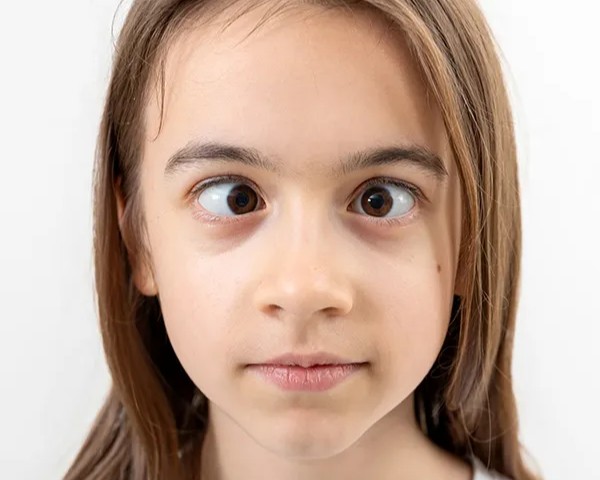
Squint
Our eyes work together as a coordinated team to focus on objects and send identical images to the brain. The brain merges these images into a single, three-dimensional view—a process known as binocular vision. For this coordination to occur, both eyes must be aligned and move synchronously.
In squint, this synchronization breaks down. Each eye sends a different image to the brain, creating confusion or double vision. To manage the conflict, the brain may begin to ignore the image from the misaligned eye, leading to suppression and possibly lazy eye. This condition, if untreated, can permanently affect visual development in children.
Types of Squint (Strabismus)
Squint can appear in various forms, depending on the direction of eye deviation and its underlying cause. The major types include:
-
Esotropia (Convergent Squint)
The affected eye turns inward toward the nose. It is the most common type in children and often linked to excessive focusing or farsightedness (hypermetropia).
-
Exotropia (Divergent Squint)
Here, the affected eye drifts outward, away from the nose. Exotropia may occur intermittently—especially when the person is tired, daydreaming, or looking at distant objects.
-
Hypertropia
In hypertropia, one eye is higher than the other. It is usually caused by a weakness or paralysis in one of the muscles that control vertical eye movement.
-
Hypotropia
This is the opposite of hypertropia—the affected eye is positioned lower than the other.
-
Paralytic (Nerve-Related) Squint
This type occurs when the nerves controlling eye muscles are damaged, often due to trauma, diabetes, stroke, or neurological disorders.
-
Intermittent Squint
This form appears occasionally and may worsen with fatigue or illness. It often starts in childhood and can become constant if not managed early.
Causes of Squint
Squint can arise from a range of causes, both congenital and acquired. Understanding the underlying reason is key to effective treatment. Common causes include:
- Genetic factors: Family history of squint increases the risk in children.
- Refractive errors: Uncorrected farsightedness (hyperopia) makes the eyes strain to focus, leading to misalignment.
- Eye muscle imbalance: Weakness or overactivity of certain eye muscles causes deviation.
- Neurological problems: Nerve palsy or brain injury can affect the control of eye movement.
- Premature birth: Premature infants are more prone to squint due to underdeveloped visual systems.
- Trauma: Injuries to the head or orbit can disrupt the eye muscles or nerves.
- Medical conditions: Conditions such as diabetes, thyroid eye disease, or stroke can contribute to squint in adults.
Symptoms of Squint
The symptoms of squint can vary depending on the type and severity. Common signs include:
- Misaligned eyes (visible turning of one eye)
- Double vision (diplopia)
- Poor depth perception
- Eye strain or discomfort
- Closing or covering one eye to see better
- Tilting or turning the head to focus
- Lazy eye (amblyopia) in children
- Blurred or fluctuating vision
In children, squint is often painless and may go unnoticed unless the misalignment is visible. Parents should observe any abnormal head postures or signs of visual discomfort and seek an eye specialist’s evaluation promptly.
Diagnosis of Squint
A comprehensive eye examination is essential to determine the type and cause of squint. A paediatric ophthalmologist or squint specialist performs several tests, including:
- Visual acuity test: Measures how clearly each eye can see.
- Refraction test: Detects refractive errors like nearsightedness or farsightedness.
- Cover test: Evaluates eye alignment and fixation.
- Ocular motility test: Checks eye movement and muscle function.
- Binocular vision assessment: Determines how well both eyes work together.
- Retinal and nerve examination: Rules out neurological causes or structural eye issues.
In adults, further investigations such as CT or MRI scans may be needed if a nerve palsy or brain lesion is suspected.
Treatment Options for Squint
The goal of squint treatment is to achieve proper eye alignment, restore binocular vision, and prevent lazy eye. The treatment plan depends on the patient’s age, type of squint, and underlying cause.
-
Glasses and Contact Lenses
If the squint is due to a refractive error, prescription glasses or lenses can correct the problem. For example, hypermetropic children with esotropia often achieve alignment with glasses alone.
-
Prism Lenses
Prisms are special lenses that bend light entering the eye, helping to align the visual images and reduce double vision. They are especially beneficial in mild adult squint cases.
-
Eye Exercises (Orthoptics)
In some types of squint, particularly intermittent exotropia, eye exercises strengthen coordination between both eyes. Orthoptic therapy is non-surgical and improves focus and fusion control.
-
Patching Therapy
If amblyopia (lazy eye) develops due to squint, patching the stronger eye forces the weaker one to work harder, improving its vision. This therapy is most effective in children under eight years old.
-
Botox Injections
Botulinum toxin injections can temporarily weaken overactive eye muscles, allowing the eyes to realign. It is a minimally invasive alternative to surgery and is useful for both diagnostic and therapeutic purposes.
-
Squint Surgery
When non-surgical methods fail, surgery becomes necessary. The surgeon adjusts the tension of eye muscles by tightening or loosening them to achieve proper alignment. Modern techniques use absorbable sutures and adjustable methods for more precise outcomes. The surgery is typically safe, quick, and performed under general anaesthesia in children or local anaesthesia in adults.
Post-surgery, some patients may still require glasses or vision therapy to maintain alignment and binocular vision.
Post-Treatment Care
After treatment or surgery, regular follow-ups are vital to monitor alignment and prevent recurrence. Eye exercises, vision therapy, and periodic eye exams help maintain the results. Children should be observed as they grow since changes in muscle strength or vision can alter alignment over time.
Complications if Untreated
Ignoring squint can lead to long-term visual and psychological consequences, such as:
- Amblyopia (Lazy Eye): The brain begins to ignore input from the misaligned eye.
- Permanent vision loss: In severe untreated cases.
- Loss of depth perception: Difficulty judging distance and spatial awareness.
- Cosmetic concerns: Misaligned eyes can affect confidence and social interaction.
- Chronic eye strain or headaches.
Early intervention, particularly in children, prevents these complications and ensures healthy visual development.
Living with Squint: Emotional and Social Impact
Beyond vision, squint can influence self-esteem, especially in school-aged children and adults. Misaligned eyes can draw unwanted attention, leading to social anxiety or self-consciousness. Successful treatment not only restores proper vision but also boosts confidence and quality of life.
Support from family, counseling, and early medical intervention play a crucial role in helping individuals overcome both the visual and emotional challenges associated with squint.