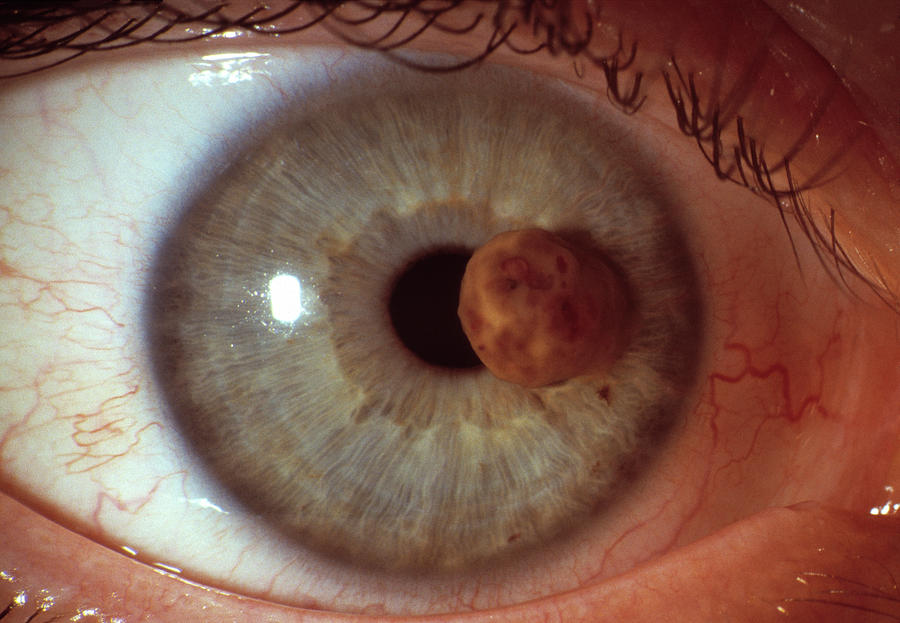
Ocular Tumours
The eyes, delicate and intricate, are not only our window to the world but also complex organs where various tissues coexist in perfect harmony. However, like any part of the body, the eye can develop abnormal growths—known as ocular tumours. These tumours may arise from any structure within or around the eye, such as the eyelid, conjunctiva, retina, choroid, or optic nerve. While the very word “tumour” often sparks fear, it’s essential to understand that ocular tumours can be benign (non-cancerous) or malignant (cancerous), and with early detection and modern treatment, many are entirely curable.
Types of Ocular Tumours
-
Eyelid Tumours
These growths form on the skin of the eyelid. Most are benign, such as chalazion or seborrheic keratosis, but some can be malignant, such as basal cell carcinoma, squamous cell carcinoma, or sebaceous gland carcinoma.
Malignant eyelid tumours may appear as non-healing lumps, ulcers, or lesions with loss of eyelashes. -
Conjunctival Tumours
Arising on the white part of the eye or the inner eyelid, these can range from harmless growths like pterygium to serious conditions like conjunctival melanoma or squamous cell carcinoma.
Conjunctival tumours often present as visible spots, patches, or pigmented lesions that may grow or spread toward the cornea. -
Intraocular Tumours
These originate inside the eyeball and can involve structures such as the retina, choroid, or iris.
The most common intraocular tumours include:- Uveal Melanoma – the most frequent primary eye cancer in adults, arising from pigmented cells in the uvea (iris, ciliary body, or choroid).
- Retinoblastoma – a rare but serious childhood eye cancer that originates in the retina, usually before the age of five.
- Choroidal Hemangioma – a benign vascular tumour that can cause vision problems if it affects the retina.
-
Orbital Tumours
These grow in the tissues surrounding the eyeball—muscles, fat, and connective tissue. Common examples include lymphoma, hemangioma, or meningioma. Symptoms may include bulging of the eye (proptosis), pain, or double vision.
-
Metastatic Ocular Tumours
Sometimes, cancer from another part of the body spreads to the eye. The choroid is the most common site for such metastases, often originating from breast or lung cancers. These tumours may cause blurred vision or visual field loss.
Causes and Risk Factors
The exact causes of ocular tumours vary, but several factors increase susceptibility:
- Genetic predisposition – certain inherited mutations, like those in the RB1 gene, cause retinoblastoma.
- Prolonged UV exposure – increases risk for eyelid and conjunctival cancers.
- Fair skin and light eyes – more prone to uveal melanoma.
- Human papillomavirus (HPV) – linked to some conjunctival cancers.
- Environmental and occupational hazards – chronic exposure to chemicals or radiation.
- Weak immune system – may allow abnormal cell growth.
Understanding risk factors aids in prevention and early detection—key elements in achieving successful outcomes.
Symptoms of Ocular Tumours
Early signs often appear subtle but should never be ignored. Symptoms vary depending on the tumour’s type and location:
- Noticeable lump or lesion on the eyelid or white of the eye
- Blurred or distorted vision
- Loss of peripheral or central vision
- Flashes or floaters in vision
- Change in iris color or dark spot inside the eye
- Bulging or protrusion of one eye (proptosis)
- Pain, redness, or irritation that persists
- Non-healing sore or ulcer on the eyelid
Some tumours may be asymptomatic and discovered only during a routine eye exam—highlighting the importance of regular checkups.
Diagnosis of Ocular Tumours
Accurate diagnosis requires detailed evaluation by an ophthalmologist or ocular oncologist. Common diagnostic methods include:
- Comprehensive Eye Examination – assessing vision, intraocular pressure, and visible abnormalities.
- Slit-Lamp Biomicroscopy – allows magnified inspection of surface lesions.
- Ophthalmoscopy or Fundus Photography – helps visualize tumours inside the eyeball.
- Ultrasound Imaging (B-scan) – used to evaluate tumour size, shape, and depth.
- Optical Coherence Tomography (OCT) – provides detailed images of the retina and choroid.
- CT or MRI Scans – determine tumour spread to surrounding structures.
- Biopsy or Fine Needle Aspiration (FNA) – confirms the type and malignancy level through tissue analysis.
Early diagnosis greatly enhances the success rate of treatment and vision preservation.
Treatment Options for Ocular Tumours
Treatment depends on the tumour’s type, location, and whether it’s benign or malignant. The primary goal is to eliminate cancer while preserving vision and the eye’s structure whenever possible.
-
Observation
Some small, benign, or slow-growing tumours are simply monitored over time with regular imaging and eye exams to ensure they don’t enlarge or change character.
-
Surgery
Surgical removal is often the mainstay for accessible tumours. Techniques range from simple excision (for eyelid or conjunctival growths) to complex procedures like enucleation (removal of the eyeball) in severe cases of intraocular cancer.
-
Laser Therapy
Lasers can target and destroy small tumours or residual cancer cells, particularly in early-stage choroidal melanoma or retinal tumours.
-
Radiation Therapy
Used for tumours that can’t be surgically removed or for metastatic lesions. Options include:
- Plaque Brachytherapy: A small radioactive disc is temporarily placed on the eye’s surface.
- External Beam Radiation: High-energy rays precisely target the tumour.
-
Chemotherapy
Used primarily for retinoblastoma or metastatic ocular cancers. It may be systemic (throughout the body) or localized (directly injected into the eye or around it).
-
Immunotherapy and Targeted Therapy
Advanced approaches use the body’s immune system or molecular drugs to attack cancer cells selectively—offering hope in resistant or recurrent cases.
Recovery and Follow-Up
After treatment, patients are closely monitored for recurrence or side effects. Vision may take time to stabilize, and artificial tears or ointments are often prescribed for comfort.
Psychological and cosmetic rehabilitation (such as prosthetic eye fitting, when needed) are integral to recovery, helping restore confidence and quality of life.
Prognosis
The prognosis for ocular tumours varies widely.
- Benign tumours often have excellent outcomes with minimal treatment.
- Retinoblastoma, when detected early, boasts cure rates exceeding 95%.
- Uveal melanoma outcomes depend on tumour size and spread; smaller tumours treated promptly yield high survival rates.
Timely detection and modern therapies have dramatically improved both survival and vision preservation for patients worldwide.
Preventive Measures
Though not all ocular tumours are preventable, certain steps can reduce risk:
- Protect eyes from UV radiation with sunglasses and hats.
- Avoid smoking and limit chemical exposure.
- Maintain a healthy lifestyle rich in antioxidants.
- Schedule regular eye examinations, especially for those with a family history of eye cancer.
- Seek medical advice promptly for any new or persistent eye changes.