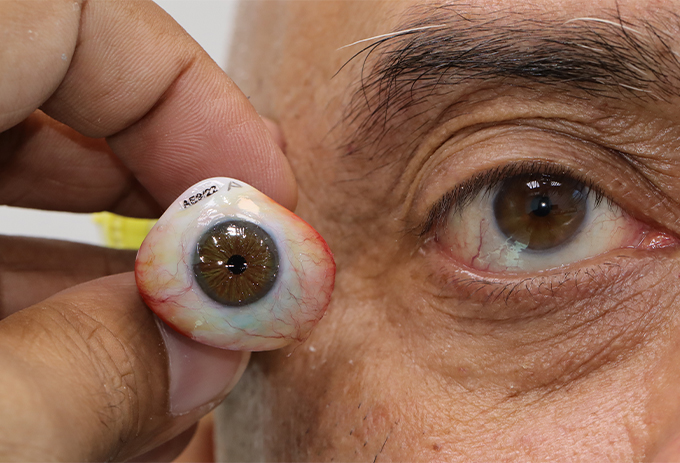
Artificial Eye Fitting
An artificial eye is a carefully crafted prosthesis designed to replace a missing natural eye. Unlike a simple cosmetic cover, a modern ocular prosthesis is a work of medical artistry—engineered to mimic the natural eye in color, contour, and motion. It fits comfortably into the eye socket, restoring facial harmony and emotional assurance to the patient.
The process typically follows enucleation (complete removal of the eye) or evisceration (removal of the inner contents of the eye, leaving the outer shell intact). Once healing occurs, a custom prosthesis is designed and fitted by an ocularist, a specialist trained in fabricating and adjusting artificial eyes.
The Purpose of an Artificial Eye
The main objective of an artificial eye is aesthetic restoration. It helps reestablish a natural facial appearance, ensuring both eyes look symmetrical and lifelike. However, its benefits extend beyond mere looks:
- Emotional Healing: Regaining one’s facial symmetry plays a major role in psychological recovery after eye loss.
- Functional Protection: The prosthesis shields the sensitive inner socket tissues from dust, dryness, and infection.
- Social Confidence: With natural movement and appearance, patients can interact confidently without self-consciousness.
While artificial eyes cannot restore sight, they help the individual reclaim visual harmony—the reflection of wholeness that mirrors inner confidence.
The Procedure: Step-by-Step
-
Initial Consultation:
The journey begins with a detailed assessment by an ophthalmologist and ocularist. Medical history, type of surgery, and healing progress are reviewed to determine readiness for fitting.
-
Socket Examination:
The ocularist examines the shape, depth, and condition of the eye socket. If necessary, minor surgical corrections may be recommended for optimal prosthesis fitting.
-
Impression Moulding:
A gentle impression material is placed into the eye socket to capture its precise shape. This ensures the prosthesis fits comfortably and securely.
-
Wax Model Creation:
A wax prototype of the artificial eye is sculpted and tested in the socket to check comfort, eyelid movement, and alignment with the natural eye.
-
Customization and Painting:
The artistry unfolds here. Using fine brushes and pigments, the ocularist paints the iris and sclera to exactly match the patient’s natural eye, including subtle veins and color nuances.
-
Final Fitting:
Once complete, the prosthesis is polished and carefully inserted. The ocularist ensures that the artificial eye aligns naturally and moves harmoniously with the remaining eye.
Post-Fitting Care
After the fitting, patients are guided on maintenance and hygiene. Regular cleaning is essential to ensure comfort and prevent infections. Typically, the prosthesis can be removed, cleaned with mild solutions, and reinserted easily.
Follow-up visits are recommended every six to twelve months to assess fit and polish the prosthesis. Over time, socket tissues can subtly change, making periodic adjustments necessary. With proper care, an artificial eye can last five to seven years before needing replacement.
Who Can Benefit from Artificial Eye Fitting?
Artificial eye fitting is suitable for individuals who have lost one or both eyes due to:
- Traumatic injuries
- Severe infections
- Congenital eye deformities
- Ocular tumors
- End-stage glaucoma or other blinding diseases
Even partial eye loss or deformities can often be addressed with scleral shells, thinner prostheses that cover the damaged natural eye while preserving its form.
Advantages of Modern Ocular Prosthetics
Modern prosthetic eyes combine medical precision with artistic finesse. Some notable advantages include:
- Custom Aesthetics: Hand-painted detailing replicates the patient’s original eye color and structure.
- Improved Mobility: When fitted correctly, the prosthesis moves naturally with facial expressions and eye motion.
- Enhanced Comfort: Lightweight materials like medical-grade acrylics ensure smooth fitting without irritation.
- Longevity: High-quality prostheses maintain luster and shape for years with routine care.
The emotional impact is equally significant. Patients often report renewed confidence, improved social comfort, and a restored sense of normalcy after fitting.
Psychological and Emotional Healing
Losing an eye can be deeply traumatic. Beyond the physical void lies an emotional struggle—a loss of identity and self-assurance. Artificial eye fitting serves as a bridge between loss and renewal. The moment one looks into the mirror and sees symmetry restored, it brings profound relief and renewed self-acceptance.
Rehabilitation may also include counseling, as the process involves adapting to a new self-image. Family support, understanding, and compassion play a key role during this transition.
Possible Challenges and Complications
Though generally safe, some patients may experience minor challenges post-fitting:
- Dryness or irritation of the socket
- Discharge or infection if hygiene is neglected
- Loosening of the prosthesis due to socket tissue changes
- Difficulty in movement coordination
Most of these issues can be resolved with timely follow-ups, socket polishing, or minor adjustments by the ocularist.
Life with an Artificial Eye
Once adapted, most individuals resume normal activities—reading, working, driving, and socializing—without restriction. The artificial eye does not interfere with the healthy eye’s vision.
Protective eyewear is recommended during sports or dusty environments to prevent injury to the remaining eye. A balanced diet, hydration, and sleep also support overall eye and socket health.
Emotionally, patients often rediscover their self-confidence and sense of normalcy. The prosthesis becomes a part of their identity—a quiet emblem of resilience and renewal.
The Art and Science Behind the Gaze
An artificial eye is not merely a medical device—it’s an intersection of craftsmanship and compassion. Every prosthesis tells a story: a surgeon’s precision, an ocularist’s artistry, and a patient’s courage. Behind every gaze restored lies a silent victory over adversity.
The intricate details—the perfect shade of the iris, the subtle reflection of light, the gentle movement in sync with a blink—all mirror the dedication of professionals who blend science and soul into their work.