What to Do If a Chemical Accidentally Goes Into Your Eye?
Chemical contact with the eye is a very scary situation. This can take place at home, at the workplace, in the laboratory, while cleaning, or while using things like detergents, disinfectants, cosmetics, or other chemicals.
In a chemical injury of the eye, irritation of the eye may be the mildest form, but it can be much more severe, involving damage to the cornea, conjunctiva, and other eye structures.
The most important thing to remember is simple:
The severity of the symptoms should not be taken into account when flushing your eyes. An injured eye should be flushed right away.
A chemical eye burn is an eye emergency.
What Happens When a Chemical Enters the Eye?
The eye's surface is fragile. Various chemicals may harm the conjunctiva, cornea, and other related tissues. While some chemicals might cause only slight irritation, highly acidic or alkaline substances could cause substantial harm to the tissues.
It is critical that one understands that alkaline substances are especially dangerous since they may penetrate further into the ocular tissues.
Possible symptoms after the exposure to chemical products include:
- Burning or stinging sensations
- Strong eye irritation
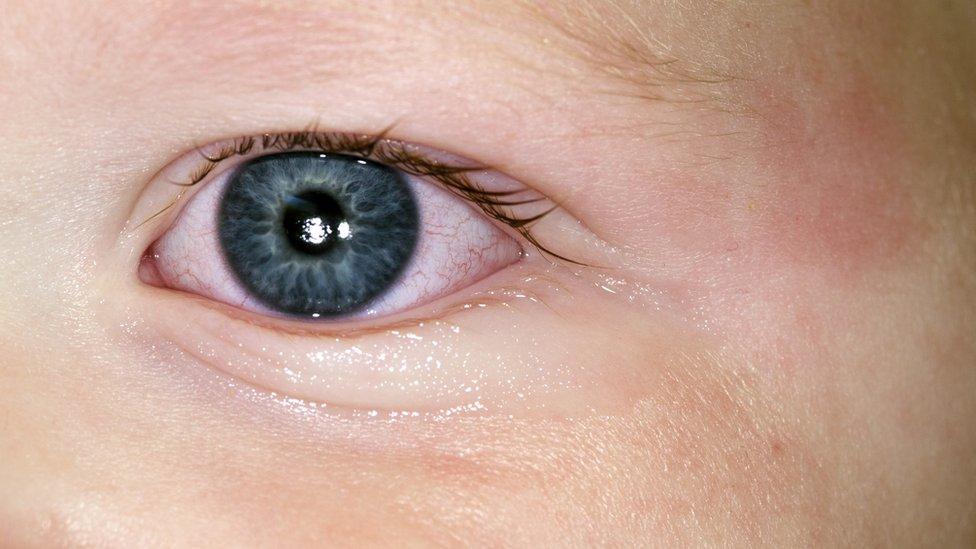
- Redness
- Overproduction of tears
- Swelling
- Cloudiness
- Light sensitivity
- Difficulty keeping the eye open
- Foreign body sensation
- Eye pain
Moreover, the intensity of the pain does not necessarily reflect the severity of the damage.
What to Do Right Away after Chemical Exposure?
1. Rinse the Eye Right Away
The most important thing to do right away is irrigation.
Use plenty of clean and warm water or, if possible, sterile saline.
Keep the affected eye open and flush it constantly with the liquid.
There is no need to look for the perfect solution when you have clean running water at hand.
2. Keep the Eyelids Open
The opening of the eye can be challenging due to pain and involuntary blinking.
Nevertheless, holding the eyelids open when washing helps the water spread on the whole eye surface. If the person wears contact lenses, start rinsing right away. Remove the lenses if they can easily be removed while rinsing, but never postpone rinsing in order to remove lenses.
3. Continue Irrigation
Chemical injury requires a complete rinse instead of several water splashes.
Keep rinsing generously while arranging prompt professional help.
When a person works in the workplace or laboratory, he/she should use an emergency eyewash station at once if it is available.
What You Should NOT Do?
Knowledge of what not to do is crucial as well.
- Do NOT rub your eye
- Rubbing can worsen mechanical irritation of the already injured eye tissue.
- Do NOT wait for symptoms to disappear
- If the feeling of burning improves after rinsing, it does not mean that further examination is not necessary.
- Sometimes chemical injury affects the eye even after the exposure itself.
- Do Not Put Random Eye Drops in the Eye
- Never use leftover antibiotic eye drops, steroid eye drops, redness eye drops or home remedies without being instructed to do so by an eye care specialist.
- Do Not Try to Neutralize the Chemical
- It is important not to try to neutralize the acid with an alkaline or the other way around.
- The addition of any new compound can result in further damage.
- Irrigation with water or a suitable solution of saline is the best immediate course of action.
- Do Not Cover the Eye and Wait
- Covering the eye before it has been properly irrigated can delay the removal of the chemical substance.
Which Chemicals Can Cause Eye Injuries?
Many compounds commonly found in our surroundings have the ability to harm the eyes either by irritating or injuring them.
These are examples of some of the compounds which may cause harm to the eye:
- Cleaning agents
- Bleach
- Disinfectants
- Soaps
- Toilet bowl cleansers
- Drain cleansers
- Chemicals from industries
- Chemicals from laboratories
- Cement and other building materials
- Cosmetics
- Hair preparations
- Agricultural chemicals
- Solvents
Many compounds commonly found in our surroundings have the ability to harm the eyes either by irritating or injuring them.
The level and the chemical composition of the material play a crucial role in determining the degree of damage.
1. Acid vs Alkali Eye Injuries
Chemical burns to the eye are usually categorized broadly as either acid or alkali burns.
2. Acid Exposure
The acid can also harm the eye tissues, leading to protein coagulation in the exposed tissues.
These can be industrial and domestic acids.
3. Alkali Exposure
Alkali exposure may be particularly harmful since alkalis have the capacity to penetrate deep into the eye tissues.
These can include cleaning agents, cement, and industrial chemicals.
In both cases, acid and alkali, the prompt irrigation is important.
Do not waste your time in figuring out which group of chemicals it belongs to.
What Happens After the Eye Is Irrigated?
After irrigation, the individual must undergo an urgent evaluation from an ophthalmologist.
In the eye examination, the following will be evaluated:
- Visual acuity
- Ocular surface
- Corneal clarity
- Corneal abrasion or perforation
- Involvement of the eyelids
- Eye pressure, where necessary
- Residual chemical substance
- Presence of any inflammation or tissue damage
Further treatment is needed depending on the injury.
The treatment regimen is determined depending on the nature of the chemical injury sustained.
Why Is a Chemical Eye Injury an Emergency?
The cornea is the transparent anterior layer of the eye that helps in vision.
Major chemical injury causes harm to the corneal layer. The injury can be severe enough to cause complications on vision.
Some of the possible complications include:
- Corneal epithelial defects
- Corneal ulcers
- Scarring
- Continuous eye inflammation
- Dry eyes
- High intraocular pressure
- Eye lid and/or conjunctival scarring
- Impaired vision
Irrigation and evaluation by an ophthalmologist could be necessary to limit the consequences of the chemical injury.
What If the Eye Looks Fine After Washing?
However much the condition improves after washing the eye, it is advisable not to make immediate conclusions that there is nothing to worry about.
Some chemical substances may appear less dangerous at first glance but should be examined by professionals.
It is particularly the case if:
- The substance is highly concentrated
- There is blurred vision
- Pain continues
- The eye is red
- There is sensitivity to light
- The substance is an industrial product
- A large amount of the substance enters the eye
- Both eyes are affected
It is advisable to bring the container or know the name and the concentration of the substance used when consulting a doctor. It will assist the doctor to make some assumptions concerning the situation.
Chemical Eye Injury at Work
Individuals who work in laboratories, hospitals, factories, construction sites, cleaning companies and other industrial areas may be more exposed to chemical substances.
A workplace which uses chemical substances should possess:
- Proper protective eyewear
- Proper labeling of containers with chemical substances
- Access to facilities for washing the eye
- Safety procedures
- Training of employees
- Material Safety Data Sheets on the chemical substance used
Prevention is always better than treatment when it comes to chemical eye injuries.
How Can You Prevent Chemical Eye Injuries?
- Basic preventive measures can help minimize the risks.
- Use Protective eyewears
- Put on protective safety goggles when working with chemicals.
- Standard prescription goggles may not be able to protect you from a splash.
- Read Product Instructions
- Always follow product safety instructions and warnings.
- Store Chemicals Appropriately
- Always store chemicals in well-labeled containers away from reach of children.
- Never pour chemicals into unlabeled containers meant for food/beverages.
- Be Cautious With Cleaning Supplies
- Stay away from bringing your face closer to cleaning supplies and have adequate ventilation where applicable.
- Have Access to Clean Water
- Always be aware of the location of your nearest source of clean water/eyewash station if you use chemicals regularly.
When Should You Seek Immediate Medical Attention?
See an ophthalmologist/emergency room immediately after exposure, especially if there is:
- Pain in the eye
- Vision problems
- Redness of the eyes
- Excessive tearing
- Photophobia
- Difficulty opening your eyes
- Swelling of eyelids
- Changes in cornea
- Exposure to any acid/alkali
- Exposure to an unknown chemical
If your vision is affected, do not drive yourself to the hospital.
A Simple Rule to Remember
In case any chemical comes in contact with your eyes:
FLUSH → KEEP RINSING → SEEK URGENT EYE CARE
- Do not rub your eyes.
- Do not wait until all symptoms subside.
- Do not try to neutralise the chemical.
- Do not use any eye drop randomly.
The objective is to wash the chemical out of your eye quickly and completely, followed by getting your eye examined.
Final Takeaway
Never take any chemical coming into your eye casually as just another case of irritation in your eye. Irrigation becomes the most crucial step after which it is imperative that your eye gets checked professionally.
In cases where symptoms may subside even after washing, a professional examination will give insight into whether your cornea, conjunctiva or nearby areas have been affected.
If you or anyone around you gets their eye exposed to chemicals, immediate and professional eye check-up becomes necessary. For special attention to your eyes and nearby areas such as orbital and eyelids,

What to Do if You Develop Redness of the Eyes

How Screen Time Affects Your Eyes: Understanding Digital Eye Strain in the Modern Age

How to Reduce the Effects of Excessive Screen Time on Your Eyes
When Should You Speak with an Oculoplasty Specialist?